Fractional CO2 Laser Milan
Resurfacing and Pigmentation with Dr. Alice Miegge
Fractional CO2 laser is a skin resurfacing treatment that uses carbon dioxide laser light to remove the skin's surface layers and stimulate new collagen production. It's indicated for deep wrinkles, sun spots, acne scars and uneven texture. Results are progressive and last 2–3 years.
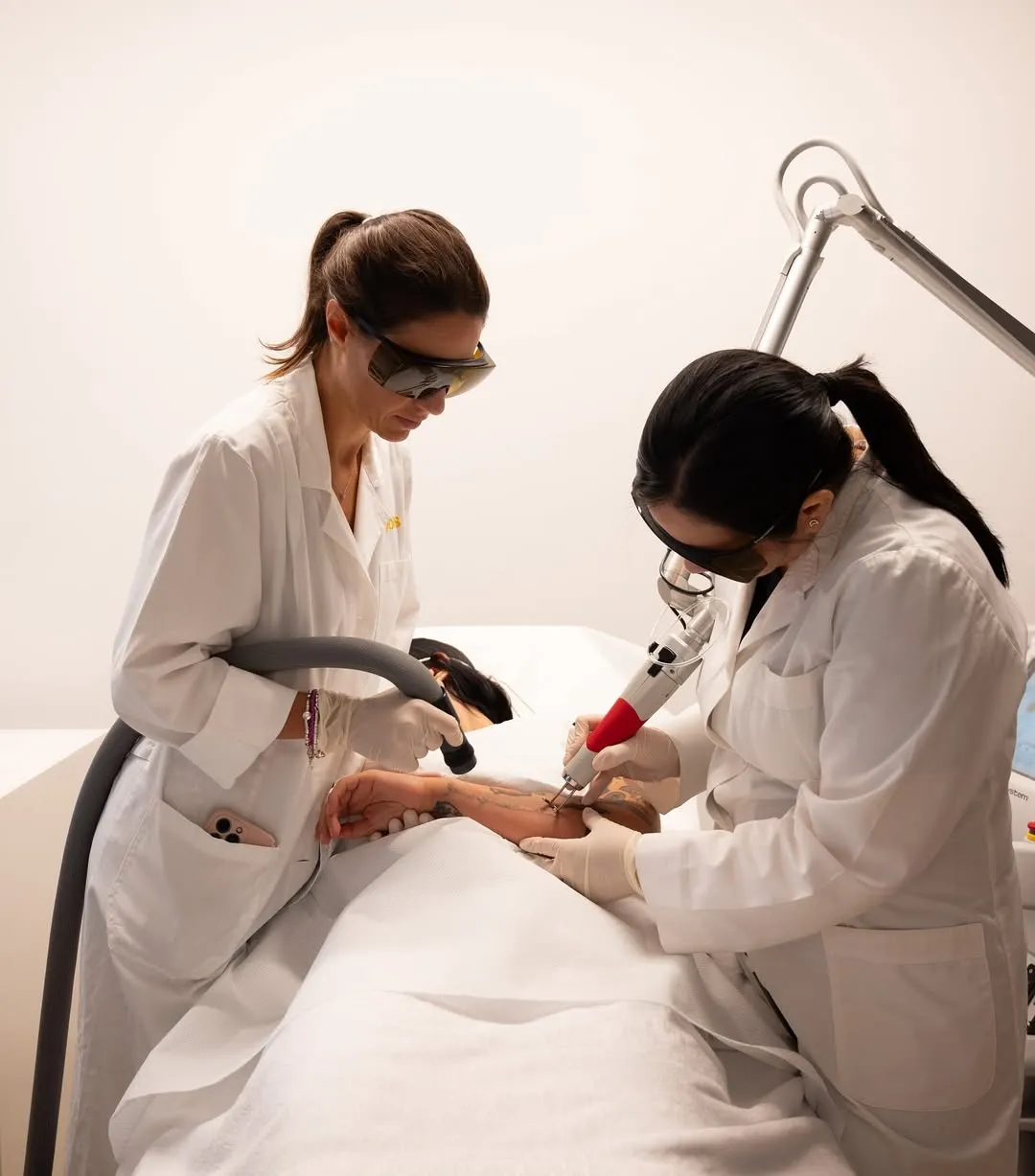
What is Fractional CO2 Laser?
Fractional CO2 laser is a skin resurfacing treatment that uses carbon dioxide laser light to remove the skin's surface layers and stimulate new collagen production. It's indicated for deep wrinkles, sun spots, acne scars and uneven texture. Results are progressive and last 2–3 years.
How the treatment works
- 1
Medical consultation and skin type assessment
Dr. Miegge assesses skin condition, Fitzpatrick skin type, the patient's expectations and any contraindications (e.g. photosensitising therapies, pregnancy, keloid tendency) to define treatment parameters and depth.
- 2
Pre-treatment preparation
In the weeks before the session, using a depigmenting cream and adequate sun protection is recommended to even out pigmentation and reduce the risk of post-inflammatory hyperpigmentation.
- 3
Application of anaesthetic
A topical anaesthetic cream is applied for 45–60 minutes before treatment. For deeper sessions or sensitive areas, local infiltrative anaesthesia may be used instead.
- 4
Fractional CO2 laser session
The laser emits micro-columns of light that penetrate the dermis to a calibrated depth, ablating the treated areas and triggering a healing response that stimulates new collagen production. The session lasts 20–45 minutes depending on the area treated.
- 5
Dressing and immediate care
After treatment, a soothing gel is applied and instructions are provided for cleansing and hydration over the following days. The skin appears red and peels over the following 5–7 days.
- 6
Strict sun protection and follow-up
In the following weeks, daily application of SPF 50+ sun protection is essential. A 4–6 week follow-up allows the result to be assessed and any further sessions to be planned.
Who it's suitable for
Deep facial wrinkles, particularly around the eyes and mouth
Sun spots and hyperpigmentation
Acne or chickenpox scars
Uneven skin texture and enlarged pores
Melasma resistant to other treatments
Actinic keratoses and superficial benign lesions
Skin showing clear signs of photoageing
Moderate skin laxity of the face and neck
Expected results
- ✓ Significant reduction of sun spots and hyperpigmentation
- ✓ Softening of deep wrinkles around the eyes and mouth
- ✓ Improved skin texture and radiance
- ✓ Reduced depth of acne scars
- ✓ Moderate lifting effect from collagen stimulation
- ✓ Progressive results within 3–6 weeks post-treatment
- ✓ Results lasting 2–3 years with correct sun protection
Clinical data
The Specialist
Dr. Alice Miegge
Surgeon specialised in General Surgery, with a Master's Degree in Aesthetic Medicine and Laser Therapy (University of Pavia). Fellowship at Imperial College NHS Trust, London. Author of 15+ international scientific publications.
Frequently Asked Questions
The treatment is performed after applying a topical anaesthetic cream for 45–60 minutes, which makes the session generally tolerable. During treatment, a warm sensation and mild stinging are felt. For deeper sessions, local anaesthesia can be used.
In the first 2–3 days, the skin looks red and swollen. Between day 3 and day 7, peeling occurs, with small scabs that fall off naturally. After 7–10 days, the skin looks renewed. It's important not to pick at the scabs to avoid scarring.
For deep wrinkles and acne scars, 2–3 sessions spaced 2–3 months apart are recommended. For sun spots and moderate photoageing, a single session with the right parameters is often enough. The number of sessions is defined during the consultation.
Yes, fractional CO2 laser is very effective for sun spots and photoageing. It works by removing the pigmented epidermal layer and stimulating cell renewal. For melasma, which has a dermal component, a combination with other depigmenting treatments may be necessary.
The first improvements in texture and radiance are visible after 2–3 weeks, once peeling is complete. The final result, with full collagen response, is reached between month 3 and month 6 post-treatment and lasts 2–3 years with adequate sun protection.
The treatment is optimal for skin types I–III (fair skin). For darker skin types (IV–VI), the risk of post-inflammatory hyperpigmentation is higher and requires more conservative parameters and longer depigmenting preparation. Skin type assessment is an integral part of the pre-treatment consultation.
Contact Dr. Miegge
Dr. Alice Miegge practises at Image Regenerative Clinic in Milan (San Babila area) and YouMedical in Seregno. A consultation is the first step towards a personalised treatment plan.