Laser Tattoo Removal Milan
Q-Switched and Picosecond with Dr. Alice Miegge
Laser tattoo removal uses high-energy light pulses to break down tattoo pigment into microscopic particles, naturally eliminated by the immune system. The number of sessions ranges from 4 to 8 depending on colours, size and depth of the tattoo, with permanent results and intact skin at the end of the course.
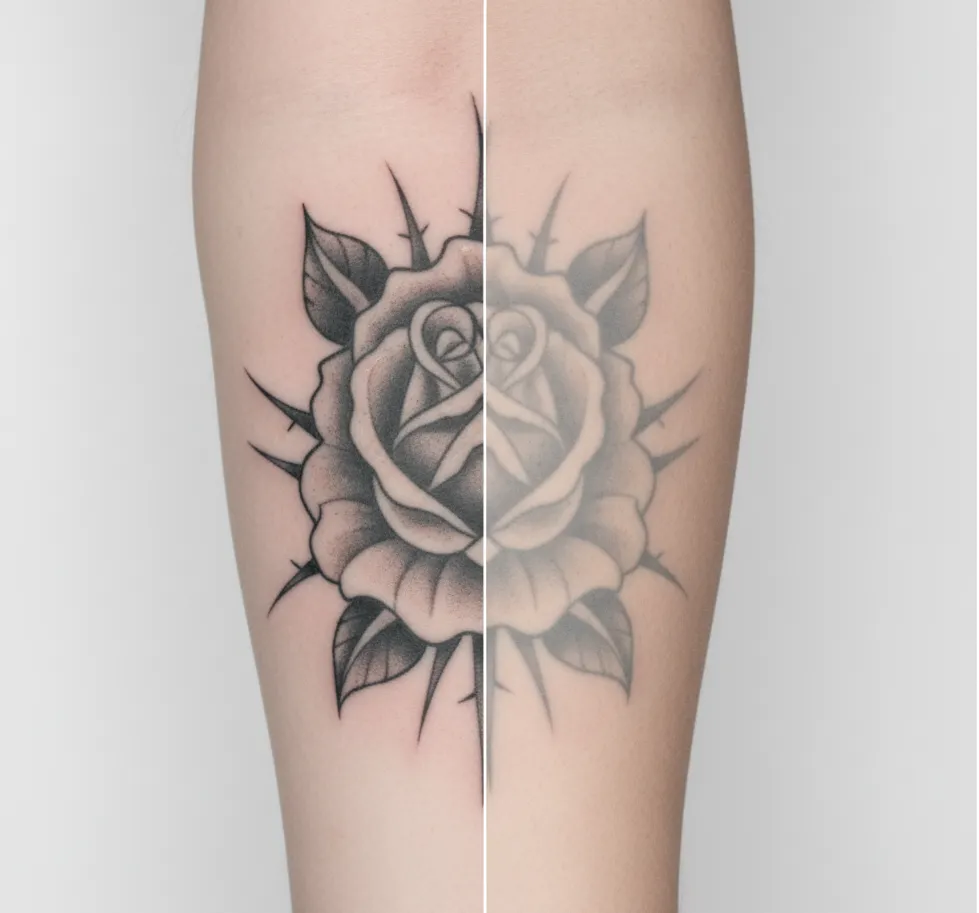
What is Laser Tattoo Removal?
Laser tattoo removal uses high-energy light pulses to break down tattoo pigment into microscopic particles, naturally eliminated by the immune system. The number of sessions ranges from 4 to 8 depending on colours, size and depth of the tattoo, with permanent results and intact skin at the end of the course.
How the treatment works
- 1
Tattoo and skin type assessment
Dr. Miegge analyses the tattoo's colours, pigment depth, age, size, and the patient's skin type to determine the most suitable laser technology and estimate the number of sessions needed.
- 2
Patch test
A test is performed on a small area of the tattoo to check the skin's response to treatment and calibrate laser parameters before the full session.
- 3
Application of anaesthetic cream
A topical anaesthetic cream is applied 45–60 minutes before the session to reduce discomfort during treatment.
- 4
Laser session
The laser emits light pulses at specific wavelengths for each pigment colour. The pulses break down the pigment into microscopic particles without damaging surrounding tissue. Duration ranges from 10 to 30 minutes depending on tattoo size.
- 5
Post-session dressing
After treatment, a soothing, antibacterial cream is applied. The treated area may show redness, swelling and small blisters in the first 2–3 days, which resolve on their own.
- 6
Interval between sessions and progressive assessment
Sessions are scheduled 6–8 weeks apart to allow the immune system to clear the pigment fragments. At each session, the degree of fading is assessed and laser parameters are adjusted.
Who it's suitable for
Dark-coloured tattoos (black, blue, green)
Coloured tattoos (red, orange, yellow) with picosecond laser
Amateur and professional tattoos
Partial removal for correction or cover-up with a new tattoo
Cosmetic tattoos (eyebrows, lips, eyeliner)
Traumatic tattoos from accidents or graphite
Allergic reactions to pigment
Expected results
- ✓ Progressive fading of the tattoo visible after each session
- ✓ Complete removal of dark pigments in 4–6 sessions
- ✓ Removal of difficult colours (yellow, light green) with picosecond technology
- ✓ Intact skin with no scarring at the end of the full course
- ✓ Possibility of partial removal to prepare skin for a cover-up
- ✓ Permanent results — removed pigment doesn't return
Clinical data

The Specialist
Dr. Alice Miegge
Surgeon specialised in General Surgery, with a Master's Degree in Aesthetic Medicine and Laser Therapy (University of Pavia). Fellowship at Imperial College NHS Trust, London. Author of 15+ international scientific publications.
Frequently Asked Questions
The number of sessions depends on several factors: tattoo colours (black and blue respond best), size, pigment depth, tattoo age and skin type. On average, 4–6 sessions are needed for single-colour tattoos and 6–8 for coloured ones. Amateur tattoos generally respond faster than professional ones.
The sensation during treatment is comparable to a rubber band snapping against the skin, repeated rapidly. A topical anaesthetic cream is applied before the session, significantly reducing discomfort. Many patients describe the treatment as tolerable, though more intense than getting the tattoo itself.
Dark colours (black, blue, dark green) respond best to traditional Q-Switched laser. Light and difficult colours like yellow, orange, pink and light green require picosecond technology, which with ultra-fast pulses breaks down even the most resistant pigments. During the consultation, the most suitable protocol for the tattoo's specific colours is defined.
When performed correctly with the right parameters, laser removal doesn't leave scars. The laser acts selectively on the pigment without damaging surrounding tissue. The risk of scarring increases with post-session infections or picking at scabs too early — it's important to follow post-treatment instructions.
Sessions are scheduled 6–8 weeks apart. This interval is necessary to allow the immune system to clear the pigment fragments broken down by the laser, and for the skin to fully recover before the next session. Shorter intervals don't improve results and increase the risk of complications.
Yes. Partial removal is a common practice for those who want to cover an existing tattoo with a new one, or correct a specific part. In this case, the laser is applied selectively only to the areas to be removed or faded, leaving the rest of the tattoo intact.
Contact Dr. Miegge
Dr. Alice Miegge practises at Image Regenerative Clinic in Milan (San Babila area) and YouMedical in Seregno. A consultation is the first step towards a personalised treatment plan.